THE BACKGROUND
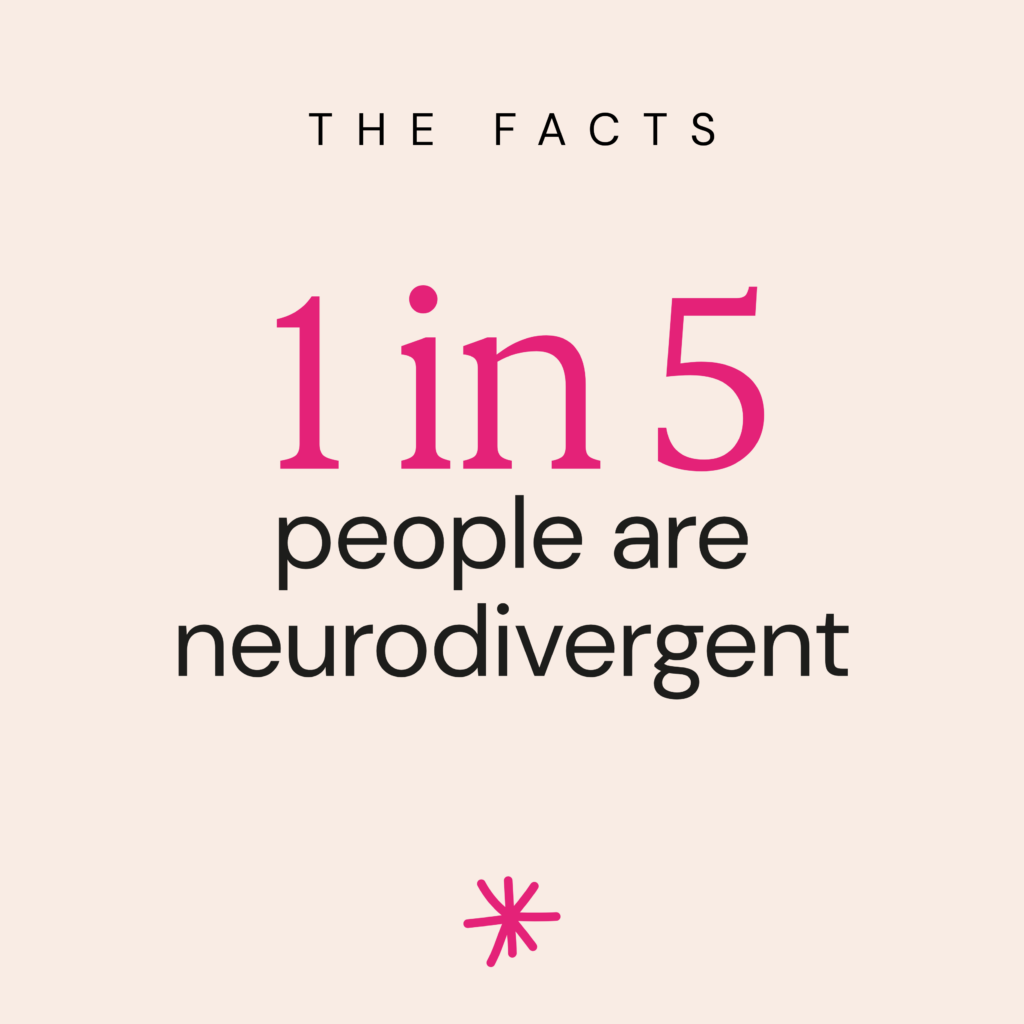
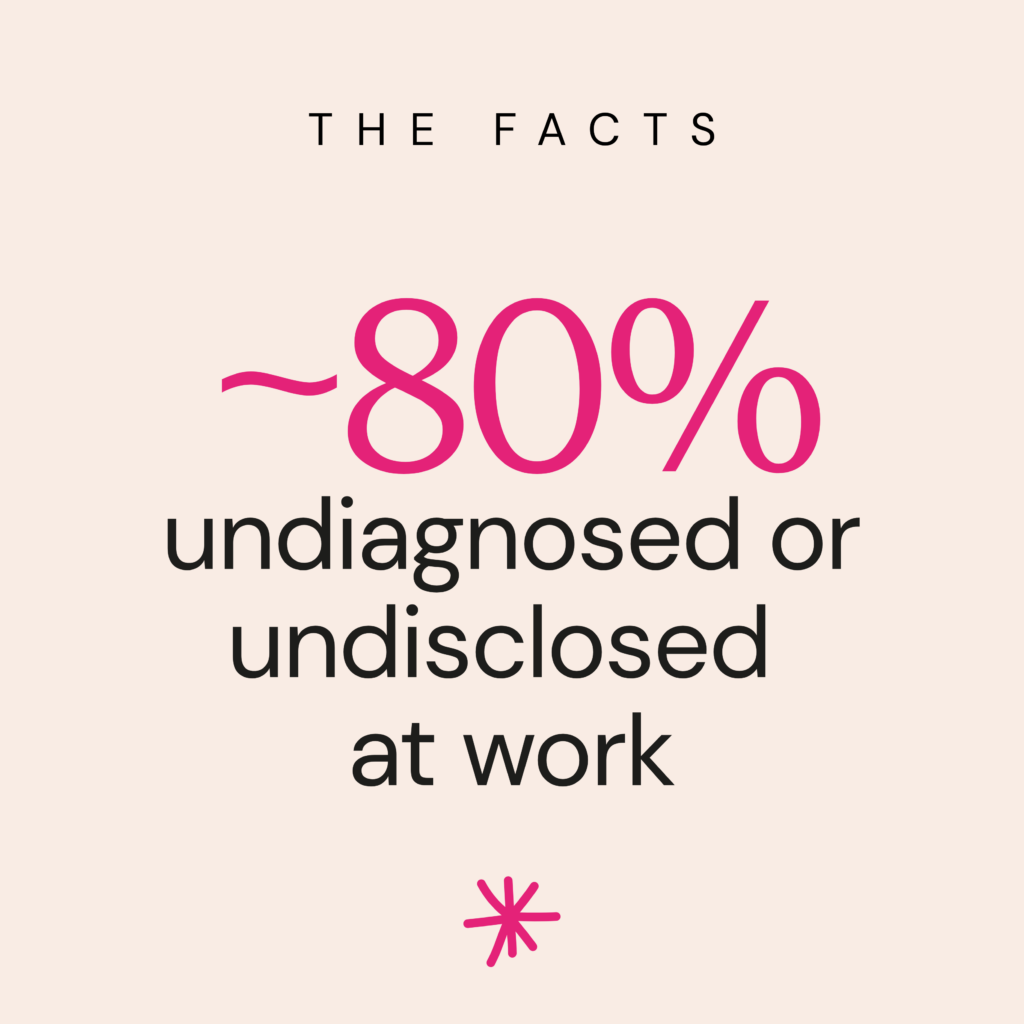
One in five people are neurodivergent. That’s not a niche issue. That’s your workforce, your leadership team, your board, and your customers.
And the vast majority of organisations are still designing their systems, their work environments, and their culture for a neurotypical default that doesn’t reflect reality.
The result: brilliant people working harder than they need to just to navigate systems that weren’t built for them. Capability that gets missed. Burnout that gets mislabelled. Talent that walks out the door.
This doesn’t have to be the story. Built for Belonging is about changing the design, so that the environment does the heavy lifting, not the person.
WHAT THIS IS NOT
This isn’t about accommodation checklists or diversity compliance.
It’s not a tick-box exercise dressed up as inclusion.
It’s about genuinely redesigning how work works, so that people who think differently aren’t spending their energy compensating for a system that doesn’t fit them.
The organisations that get this right don’t just become more inclusive. They become sharper, more innovative, and better at retaining the people who drive them forward.
WHAT WE DO
Built for brains. Built for belonging. Built better.
Audit your current environment, systems, and culture to identify where the friction is. And what it’s costing you.
Redesign ways of working, communication norms, meeting culture, and physical or digital environments to reduce cognitive load and increase contribution.
Help leaders understand neurodiversity, lead neuroinclusive teams, and build the conditions where everyone can do their best work.
From conference keynotes to team workshops.
Evidence-based, experience-grounded, and built to shift perspective.
Navigate your obligations under psychosocial safety legislation, with neuroinclusion as the frame, not an afterthought.
FLIP THE DEFAULT
Inclusion that’s automatic, not heroic.
The problem with most inclusion programs is that they put the work on the person. Adjust yourself. Disclose. Ask for what you need. Prove you’re worth the exception.
Flip the Default starts somewhere different.
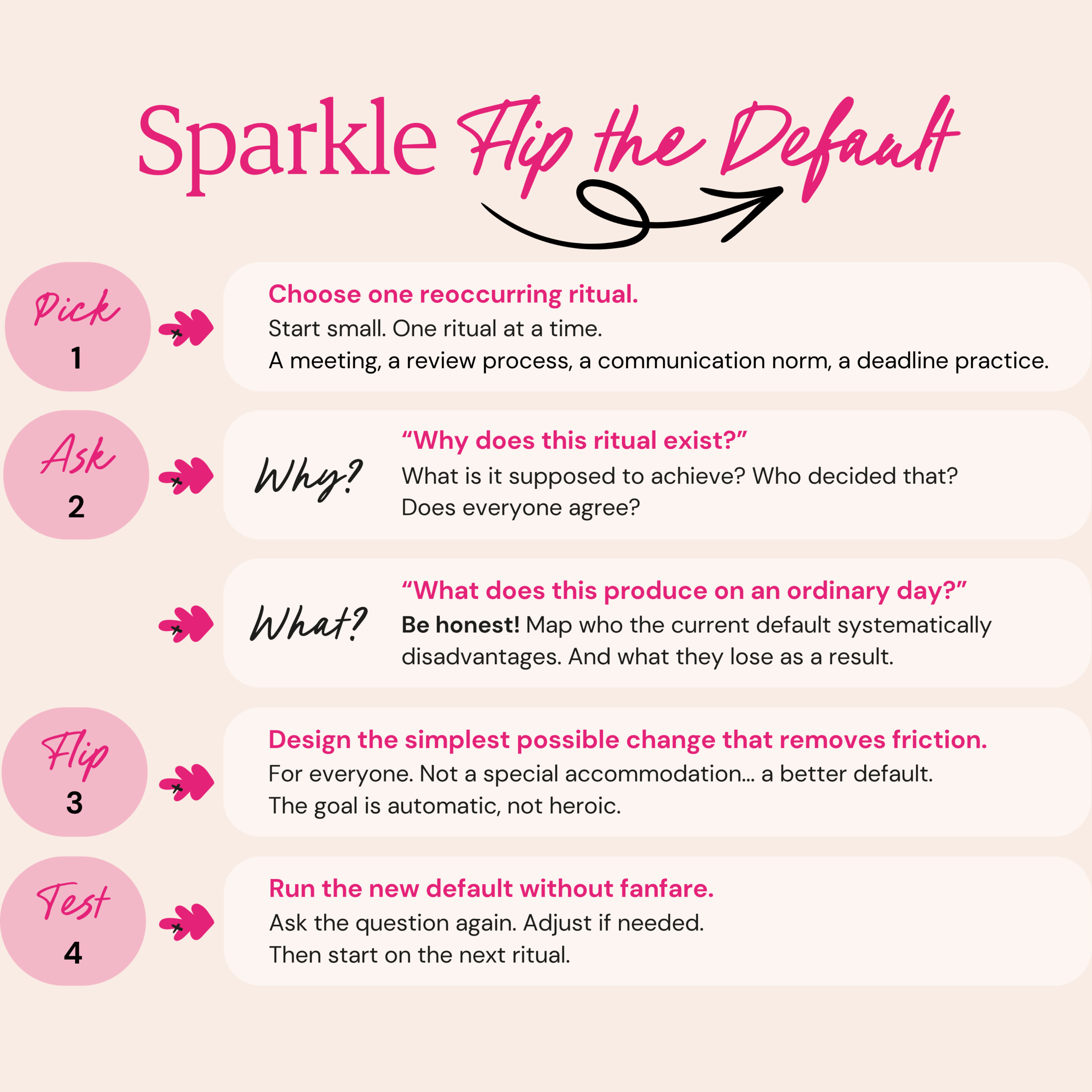
Pick one ritual. A meeting, a deadline process, a communication norm. Ask why it exists. Map who it’s quietly disadvantaging. Then design the simplest possible change that removes the friction. For everyone. No fanfare. No special cases. Just a better way of doing the thing.
That’s the whole program.
Pick. Ask. Flip. Test.
Then start on the next ritual.